0

The Crawford Auto and Aviation museum in Cleveland

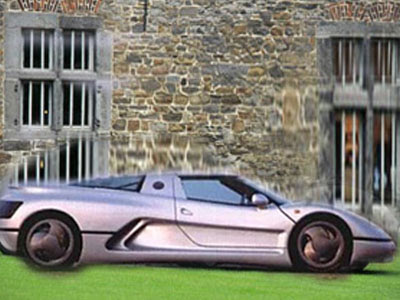
The AMX prototype, why anyone thought a rumble seat was a selling point in a car that would normally be driven over 50 mph... I doubt that anyone would enjoy that for very long.
Franklin in front, (Stanley Steamer in the back ) they look odd because they were aircooled, and didn't need the normal radiator looking front end
A 1910 Hupmobile that went around the world to prove it's durability
Owen magnetic... only 4 are said to exist, one is in this Cleveland Ohio museum, one is in the Nethercutt near Burbank Ca.

In 1900, there were over 1000 small auto manufacturers coexisting in the United States, over 70 of them in Cleveland.

The first auto sold in the US came from Cleveland's Winton Motors in 1897; the first car to make use of steel ball bearings was Cleveland's Baker Motors; and the first use of the French word "automobile" in conjunction with the US car industry was by Cleveland Plain Dealer reporter, Charles Shanks, in 1899.

The Crawford Auto-Aviation Museum was formed in 1963 with the private collection of Mr. Crawford's company Thompson Products at its core. (Thompson Products later diversified and became TRW, Inc.) The museum showcases 200 classic automobiles, among them 80 cars that originated in Cleveland. An online quick look is at http://cleveland.about.com/od/clevelandattractions/ss/crawford.htm

the above photos are from http://www.carlustblog.com/2011/04/crawford-auto-aviation-museum.html#more
Read more
0

The DOW is Crashing, And Inventions Are Soaring!


What do lipstick, chocolate, Pepto-Bismol and inventive merchandise all have in prevalent? They all sell far better during recessions. There is been very a media buzz about inventive products during this recession from infomercials becoming the topic of documentaries, to front-page newspaper and website profiles of new innovations, never prior to have inventions been so hot. Newsweek even went so far as to declare The Snuggie, that soft blanket-like robe with a hit infomercial "an emblem of our times", as the sensationally funny, yet beneficial product became the source of jokes for Jay Leno (The Tonight Show), Saturday Night Live, countless blogs and YouTube videos. No matter whether they comfort or entertain, save income or time, inventions give newness in a marketplace full of products customers may perhaps already own.  The challenge for the inventor is to tap into the requirements and desires of the consumer in crisis, so that we could produce goods that support him in a time of will need.
 
Market research shows that whilst customers in a recession could have small capability or will to invest cash on major purchases like appliances or vacations, they still reward themselves with smaller indulgences like fancy ice creams, chocolate, modest gifts, or individual amusement and selection items. Simply because monetary desperation is scary, there is an atmosphere of insecurity and anxiety. Candy, and other stress-relievers, such as liquor and movies, aid alleviate that anxiety, and make people feel superior temporarily.
 
Saving dollars by "do-it-your self" (DIY) approaches is, of course, the most obvious trend in recessionary goods.  This includes inventions that are suitable for reuse and those that enable consumers to repair other items (both of which are cost-saving and environmentally green measures). It is no surprise that gardening has come back in vogue- the success of the "Topsy Turvy" hanging tomato planter and Aquaglobe automatic plant watering device are examples of this. Michelle Obama has even planted a vegetable garden at the White House- the very first ever considering that the victory gardens of World War II. Gardening appeals to consumers who want to save income, but also to our survivalist, pioneering, do-it-yourself ethos. Gardening associations predict this trend to go up by 40%, even though vegetable seed sales have already jumped 30%. This is also a continuation of the green environmentalist trend, and urban, container and rooftop gardening are other niche markets inside this category.
 
A lot more Americans are stocking up on food, concerned about shortages and inflationary cost gauging. Self-sufficiency is of the essence here, so inventors who create accessories for hunting, fishing and camping equipment could also do fairly properly.  Items that help consumers stow away, store, or can goods are beneficial. For a extra exciting approach to grocery shopping, the fashionable Itslastik spandex bag expands to over twice it's size, and holds up to 45 pounds flexibly in any direction, whilst bouncing with the step of the user, generating the load feel lighter. The item is meant for reuse, and is consequently certifiably "green". It is also affordable, bright and appealing to present 'hipster' fashion trends, and proudly made in the USA.  
 
Where there is fear, there is a need to have for safety. Crime rates are already spiking in these desperate times, so sales of security system and personal protection goods are up. Meanwhile, the Snuggie did nicely because of our apparent need to have for a "security blanket" to comfort us. Stress relieving items (think the "Squeeze Ball") might do especially well. Sex, love and romance also relieve stress, and, historically, romance has thrived throughout recessions, as there is much more social upheaval, and the need to have for security drives consumers into the arms of another. That is why condom sales and ads for individual dating web-sites are up. The Snuggie, major enough for two, and clearly geared towards cuddling and nesting, also speaks in the language of adore.
 
Because countless buyers lack the disposable income to vacation or go out to restaurants, they are spending even more time at household, entertaining, cooking, and organizing, so that their household is far more pleasant and functional. Property organization goods are critical, as consumers start to control what small they still have- the property and their current possessions. Organizing and cleaning give a sense of control in a chaotic and unstable world. The extremely productive ShamWow super-absorbent, reusable cloths are intended to replace disposable paper towels. Another favorite nesting item performing well is The Wonder Hanger, an organization product that triples closet space by holding up to five garments on standard hangers in a vertical cascade. Customers throughout recessions are pushed to take stock of, inventory and repair what they already own, as opposed to going out and acquiring far more stuff.  As low-cost credit has virtually dried up, the number of Americans driving drastically older used cars has observed a dramatic boost. These older cars frequently have to have more repair, so accessories related to auto repair and maintenance could see a enormous spike in sales.
 
 'Trading Down' to cheaper items is a given during recessions. To acquire a new look, quite a few ladies replace acquiring a new outfit with the cheaper trick of buying a new lipstick or accessory. The "Lipstick Index", a term coined in the course of the Excellent Depression, has in no way been so high as it is now, as women flaunt their require for visibility, and desirability, by buying and wearing lipstick (often red). In recessions, there is a greater want to look one's perfect- no slouches will be tolerated in the already precarious job marketplace. Clothing repair and reuse is huge, as are 'DIY' salon/beauty replacements. For example, the REM Spring facial hair removal tool has turn into a large hit, as several women who commonly would pay for someone to wax off their unwanted hair are now employing this reusable, battery-absolutely free metal spring instead. Meanwhile, acne and wrinkle reduction treatment has been revolutionized with the invention of at-property light therapy kits. Verilux provides the ClearWave® Soothing Skin Program, a hand-held light 'wand' that uses Natural Spectrum® light to kill acne bacteria and lessen fine lines. Unavailable a number of years ago, the market for this only stands to grow.
 
With accessories being paramount in the course of recessions, Tweakerz bra clip, Bosom Button and Winkee cleavage covers have all turn out to be popular for their ability to aid consumers alter clothes they already own. Tweakerz bra clip creates a 'lift' in a woman's cleavage, re-energizing worn bra straps. Bosom Button is a gem-like pin that enables shirts that are too low-cut to be created much more suitable by fastening fabric together. The Winkee is a piece of fabric that attaches to bra straps and covers the gap in cleavage revealing shirts. These goods make women's wardrobes extra wearable and functional, saving cash and facilitating re-use.
 
The advertising of inventive items has by no means been more visible than it is now. Main drugstores now have prominent spaces devoted solely to 'as observed on TV' and inventive goods. As conventional advertising budgets are slashed, infomercials have gained access to the more high priced primetime ad space on television. The additional unemployed and underemployed individuals there are, the extra consumers there are staying at residence, watching Television, and thereby watching infomercials. The world wide web also expanded the market for inventive goods. Asseenontv.com is a great place to find out about inventions on the marketplace.
 
I have been in the invention licensing, advertising, consulting and sales organization for over 15 years. This month, in the heart of the recession, my business experienced our highest sales ever. The bottom line is that unique and inventive products do fairly nicely in a poor economic climate. If history is a guide, then innovation and invention will be important to getting us out of this recession. Inventions could not be more relevant the time to launch yours is now.

Read more
0

Prototype Machining History and Rapid Prototyping Assembly History


Rapid prototyping is a revolutionary and effective technologies with wide range of applications. The process of prototyping involves fast building up of a prototype or working model for the purpose of testing the several design characteristics, ideas, concepts, functionality, output and performance. The user is able to give immediate feedback relating to the prototype and its performance. Rapid prototyping is critical component of the procedure of system designing and it is believed to be very beneficial as far as reduction of project price and risk are concerned.

Rapid prototyping is identified by quite a few terms as per the technologies involved, like SFF or solid freeform fabrication, FF or freeform fabrication, digital fabrication, AFF or automated freeform fabrication, 3D printing, solid imaging, layer-based manufacturing, laser prototyping and additive manufacturing.

History of Rapid Prototyping:

Sixties: The very first rapid prototyping approaches became accessible in the later eighties and they were utilised for production of prototype and model parts. The history of rapid prototyping can be traced to the late sixties, when an engineering professor, Herbert Voelcker, questioned himself about the possibilities of doing interesting items with the personal computer controlled and automatic machine tools. These machine tools had just started to appear on the factory floors then. Voelcker was attempting to discover a way in which the automated machine tools could be programmed by making use of the output of a style program of a personal computer.

Seventies: Voelcker developed the standard tools of mathematics that clearly describe the 3 dimensional aspects and resulted in the earliest theories of algorithmic and mathematical theories for solid modeling. These theories form the basis of modern laptop or computer programs that are used for designing virtually all items mechanical, ranging from the smallest toy auto to the tallest skyscraper. Volecker's theories changed the designing methods in the seventies, but, the old strategies for designing were still extremely significantly in use. The old strategy involved either a machinist or machine tool controlled by a pc. The metal hunk was cut away and the needed portion remained as per requirements.

Eighties: Still, in 1987, Carl Deckard, a researcher form the University of Texas, came up with a beneficial revolutionary thought. He pioneered the layer based manufacturing, wherein he thought of building up the model layer by layer. He printed 3D models by utilizing laser light for fusing metal powder in solid prototypes, single layer at a time. Deckard developed this idea into a technique known as "Selective Laser Sintering". The outcomes of this method were highly promising. The history of rapid prototyping is quite new and recent. Even so, as this method of rapid prototyping has such wide ranging scope and applications with incredible outcomes, it has grown by leaps and bounds.

Voelcker's and Deckard's stunning findings, innovations and researches have given extreme impetus to this considerable new business identified as rapid prototyping or cost-free form fabrication. It has revolutionized the designing and manufacturing processes.

Though, there are a number of references of folks pioneering the rapid prototyping technologies, the market gives recognition to Charles Hull for the patent of Apparatus for Production of 3D Objects by Stereolithography. Charles Hull is recognized by the market as the father of rapid prototyping.

Present-day Rapid Prototyping: At this time, the personal computer engineer has to simply sketch the tips on the computer screen with the assist of a design program that is personal computer aided. Computer aided designing allows to make modification as required and you can generate a physical prototype that is a precise and suitable 3D object.

Read more
0

1961 Cadillac Brougham Jacqueline coupe, body by Pinin Farina


full story from Hemmings at http://www.hemmings.com/hcc/stories/2009/05/01/hmn_feature9.html

One just sold at Bonhams Auctions, it went for $289,000

The Jacqueline was named for the wife of the American President at the time, it debuted at the 1961 paris Auto Show. In the 1990's the head of Cartier, Alain Perrin had the concept (no powertrain) grafted to a 1960 Cadillac Eldorado Biarritz
Read more
0

Jeep minivan prototype designed by Brooks Stevens

Read more
0

Tucker's 2nd try (The Carioca) was from a De Sakhnoffsky design, and potentially would have been made in Brazil

cover illustration of the Carioca from Dec. 1955 Car Life magazine found on aldenjewell's Flikr page http://www.flickr.com/photos/autohistorian/3516254868/


Read more
0

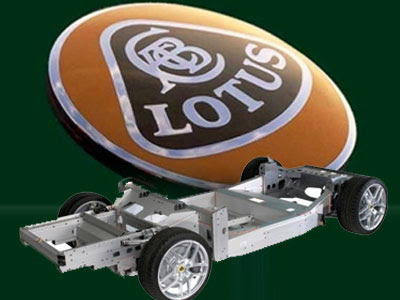
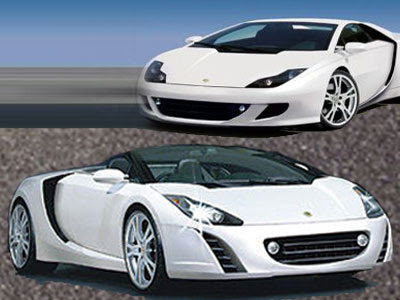
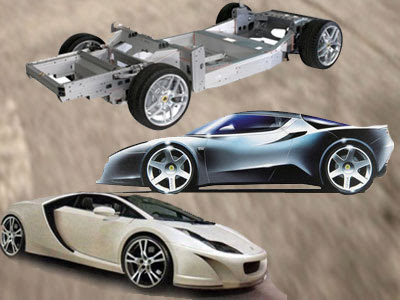
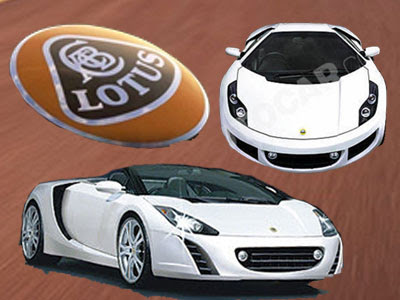
2011 Lotus Esprit Sports Car will be a wholly different Beast powered by a 4.4 liter V8 engine

2011 Lotus Esprit Sports Car

The guys over at AutoCar have caught the upcoming Lotus Esprit testing in cold-snowy weather of Sweden. After running some DVLA records and matching the license plate, AutoCar has learned that the prototype is powered by a 4.4 liter V8 engine. Lotus sources have previously said that BMW may be the supplier for Lotus’ 2011 Esprit.It’s possible that the new Lotus Esprit will carry the 4.4 liter twin-turbo V8 engine from the new BMW X6, but will most likely be tuned to develop 500 horsepower.Currently the 4.4 liter twin-turbo from V8 produces 400 horsepower. The engine is also expected to be used in other BMW models including the X5 and the 7-Series. Lotus engineers will most probably re-work the engine management to reach numbers closer the Nissan GT-R and the Porsche 911 Turbo.
According to Lotus insiders, the next-gen Elise will arrive sometime in early 2011 followed by an all-new V8-powered Esprit in 2012...............................2011 Lotus Esprit Sports Car

The 2011 Elise will likely be built upon an evolved version of the current model’s extruded-aluminium underpinnings and continue the same formula that’s made the pint-sized sportscar a track day fave, but the Esprit will be a wholly different beast.
While the new Elise is all but locked in, the Esprit project is very much dependent on whether Lotus can sell enough Evoras to fund it. The timeline for the Esprit is also at the mercy of the global economic situation, with Lotus likely to delay the Esprit and forge ahead with a far less costly drop-top Evora if the recession persists much longer.
If it launches on time, the Esprit could be Lotus’ best hope of gaining a much larger share of the sports car market.
There are speculations stating that the 500bhp V10 powerplant can be the source of power for the Lotus Esprit, which will be released in 2012...............................2011 Lotus Esprit Sports Car

The engine is currently being used in the Lexus LF-A, a car that has not yet been launched itself. Being connected with the Japanese carmaker Toyota, Lotus has access to its entire range of parts and components, as well as powerplants from the Lexus line. This points to the likelihood of an Esprit flagship, costing more than ?100,000, equipped with the compact 8500rpm V10 unit (to rival the Lamborghini Gallardo), including a less expensive variant equipped with the 5-liter, 417bhp V8 from the Lexus IS-F and an entry-level model coming with a Lotus-tuned direct-injection Toyota V6 unit that can come up with 300bhp.
Although a V8 or a V10 unit would definitely boost the profile of Lotus, there is also a possibility of an Eco Esprit. Lotus is moving forwards with more efficient products with lightweight engineering and its keen interest in alternative fuels and hybrid solutions. This is also underline by its partnership with the electric car manufacturer Tesla...............................2011 Lotus Esprit Sports Car

The Esprit was inspired by the larger bonded and extruded aluminum chassis of the recently launched Evora, the rear section of which have been developed to accommodate both transversely and longitudinally fitted engines. Although the Lotus has shown that it can develop a new model in a short time (the Evora, for example, was developed in 27 months), the work on the Esprit will only reach its maximum when the Evora is being swept out of showrooms in the UK, Europe and US. It is the Malaysians who are funding the Evora project, with the persuasion of Lotus CEO Mike Kimberley.
Read more
0

Lamborghini "Concept S" Supersportscar, The "Concept S" is equipped with a powerful V10 engine.

Lamborghini "Concept S"

The Lamborghini "Concept S" design study premiered at this year's Geneva Motorshow as an extreme and spectacular expression of the Lamborghini brand.
The House of the Raging Bull has shown the first driveable prototype of the Lamborghini "Concept S" at the Monterey Concorso Italiano and at the Pebble Beach Concours d'Elegance in the USA.It was created at the Centro Stile Lamborghini in Sant'Agata Bolognese by Luc Donckerwolke, who drew inspiration from the classic single-seater racing cars of the past.The astonishing amount of public interest at the Geneva Motor Show prompted the decision to build a driveable prototype in order to further gauge potential customer demand.
The driveable "Concept S" prototype has only changed slightly compared to the original design study. For example, the so-called "saute-vent" windscreens were re-designed for homologation reasons. The look of the car results even more extreme than the original.
"The "Concept S" represents everything that Lamborghini stands for. It is extreme, uncompromising and Italian," commented Stephan Winkelmann, President and CEO of Automobili Lamborghini. "A production decision has not yet been made, though we were encouraged by the positive response to the driveable prototype at both Monterey and Pebble Beach." ..............................Lamborghini "Concept S"

The aerodynamics of the "Concept S" have been optimised thanks to front and rear spoilers and a large rear diffuser. An electronically controlled, retractable central rear view mirror allows the driver to see what is happening behind the car - when required!
The House of the Raging Bull has shown the first driveable prototype of the Lamborghini "Concept S" at the Monterey Concorso Italiano and at the Pebble Beach Concours d'Elegance in the USA.
Classic single-seaters did not have a traditional windscreen, but utilised the „saute-vent" in order to direct air over the head of the driver. In the "Concept S", these devices divide the cabin into two distinct compartments, giving the car an aggressive and futuristic look.
They also create a space between them that acts as an additional air inlet for the engine, which is positioned behind the seats. And like the Gallardo, which serves as the basis for this stunning supersportscar, the "Concept S" is equipped with a powerful V10 engine. ..............................Lamborghini "Concept S"

The Lamborghini "Concept S" design study premiered at this year's Geneva Motorshow as an extreme and spectacular expression of the Lamborghini brand. It was created at the Centro Stile Lamborghini in Sant'Agata Bolognese by Luc Donckerwolke, who drew inspiration from the classic single-seater racing cars of the past.
The driveable "Concept S" prototype has only changed slightly compared to the original design study. For example, the so-called "saute-vent" windscreens were re-designed for homologation reasons. The look of the car results even more extreme than the original.

Read more
0

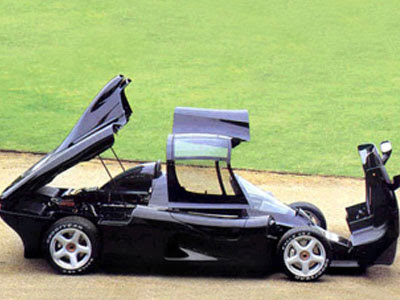
Yamaha OX99-11 Supercar 3498 cc V12


Yamaha OX99-11 Supercar 3498 cc V12

Yamaha initially approached a German company to come up with some designs for the supercar. However Yamaha dismissed the proposals as they were considered to similar to existing supercars. IAD were at this point hired to continue work on the project. In 1992 IAD came with an initial version of the OX99-11.
The Yamaha OX99-11 was a supspercar designed by IAD, an English engineering consultancy, and Yamaha subsidiary Yilon Technology.
While the Yamaha OX99-11 was originally slated to appear in 1994, the roots of the OX99-11 project began in 1989 when Yamaha began competing in Formula One, later this spawned the desire to create a supercar based on Formula One technology.
Despite the fact the Formula One team was less than competitive, a new engine called the OX99 appeared in 1991, helping to give the new car a name.
Yamaha OX99-11 Supercar 3498 cc V12

The new car featured an unusual and somewhat ugly design, features like the prominent front spoiler, tandem seating, cockpit shaped roof and protruding engine scoop stood out from other vehicles. Other features of the car which were rather extreme included the carbon fiber chassis and OX99 engine which were borrowed from the F1 car.
Budget disagreements meant the Yamaha OX99-11 project was taken from IAD and handed over to Ypsilon Technology, who were given 6 months to finish the project. A further blow to the project was came in the form of a financial crisis which hit Japan and it was decided that there wouldn't be enough buyers capable of handing over the vast sums of money needed to buy the car. In 1994 the Yamaha OX99-11 project was axed. By this point only 3 prototypes had been constructed.
Read more
0

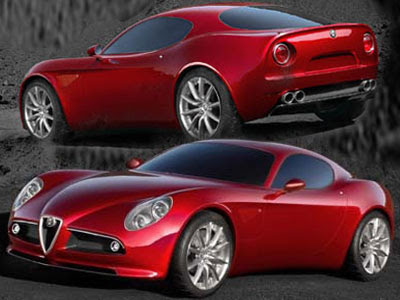
8c Competizione Alfa Romeo Maserati V8 engine Sports Car


8c Competizione Alfa Romeo

Designed and developed at the Alfa Romeo Style Centre, the 8c Competizione prototype pays homage to road racing Alfa's of the 30s and 40s which bore the 8c signature, while 'Competizione' refers to the 6C 2500 Competizione, a car driven by Fangio and Zanardi in the Mille Miglia race of 1950. (see 2006 BMW Mille Miglia concept)

8c Competizione Alfa Romeo


The Alfa 8c is a retro design powered by a Maserati V8 engine
Alfa Romeo are well known for producing flamboyant and beautifully styled cars, sometimes overlooking reliability. The 8c Competizione concept takes this philosophy to another level, and is one of the most stunning designs to come from the Italian manufacturer.

The flowing graceful lines of the 8c Competizione are a trait shared with another Alfa concept, the Nuvola. Both cars are inspired and shaped by Alfa Romeo models of the past, and their aesthetic design reflects this retro influence.
Read more
0

Audi R15 Tdi Diesel-Engined Sportscar Petit Le Mans Race

New Sports Audi R15 Tdi Petit Le Mans Race

Britain’s Allan McNish (pictured) came tantalisingly close to achieving his fifth Petit Le Mans race victory at Road Atlanta on Saturday (26 Sep) and maintaining Audi’s 100% winning record in the annual American sportscar endurance race since the German manufacturer’s debut in 2000.
The Dumfries-born double Le Mans 24 Hour race winner and Italian co-driver Dindo Capello led for the opening 4hrs before the Scotsman suffered two spins and dropped to third place on the treacherously wet and slippery track in Georgia - moments before the race went in to a Safety Car period and was ultimately stopped with almost five hours run.
After a further delay of almost four hours and near constant heavy rain, organisers decided not to re-start the event which in any case was limited to 10 hours or 1,000-miles, leaving the McNish/Capello diesel-engined Audi R15 TDI classified third, a mere 3.465secs behind the winning Peugeot (Franck Montagny/Stephane Sarrazin).
The McNish/Capello Audi had started from third place on the 27-car grid but McNish swept in to the lead on the opening lap. The “sister” R15 TDI of Lucas Luhr/Marco Werner began from fourth place, a position the German duo were classified in, one lap down on the top-three, when the race was declared over. Meanwhile the McNish/Capello Audi won the efficiency award “Michelin GreenX Challenge” – a trophy awarded to the most environmentally friendly car.
Audi unexpectedly contested a third race of the year to collect further race information about its new sports-prototype in preparation for the Le Mans 24 Hours next June.
Read more
0

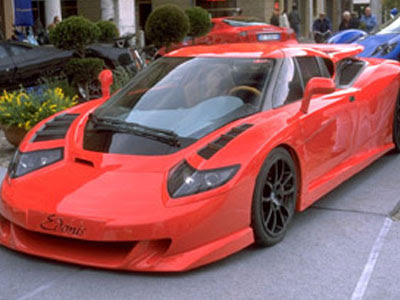
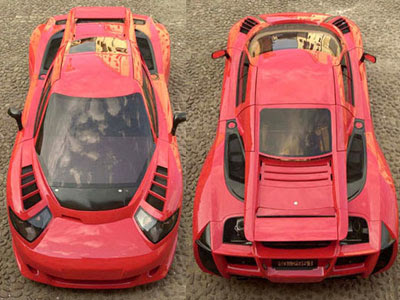
B. Engineering Edonis Super Car by Jean Marc Borel


B. Engineering Edonis Super Car by Jean Marc Borel

The Edonis cannot be described as a beautiful car, but it certainly eye catching. Its angular, complicated lines crash awkwardly together in a chaotic fashion, this trend is evident from almost every angle. The headlights give the impression of tiredness, or even depression.
The Edonis supercar is a creation of B. Engineering, a company run by Jean Marc Borel. The Edonis was intended as a demonstration of the design and prototype abilities of his company. The B. Engineering Edonis is a genuine supercar with a 0-60 time under 4 seconds, and a maximum speed of 225 mph.
B. Engineering Edonis Super Car by Jean Marc Borel

The Edonis
has little to be sad about. Twin turbochargers feed a 3.7 litre V-12 engine to create a whopping 680 bhp at 8,000 rpm. All this power is run through a six-speed manual gearbox.
Using a monocoque built from carbon fiber the Edonis is very strong and light. All the cosmetic exterior body panels are aluminum. To reduce weight further aluminum brake calipers are used.
To save even more space and weight the Edonis rides on Michelin PAX run-flat tires, this means a spare wheel is surplus to requirement.

Read more
0

Spiess TC 522 prototype supercar twin-turbo V8


Spiess TC 522 prototype supercar twin-turbo V8

The Spiess TC 522 was a supercar prototype from 1992. It was created by a Spiess, a German company better known for creating industrial electrical transformers.

The TC 522 was powered by a mid-mounted 5.7 litre, twin-turbo V8. The transmission was handled by a 6 speed manual driving the rear wheels. The Spiess TC 522 had a carbon-fibre composite body. Due to its high price, and a worldwide economic slow down, the TC 522 never left the prototype stage.
Read more