Past, present, and future sport cars makes and models from around the world. In-depth coverage and reviews of auto shows, racing events, concours d'elegance, and auctions, also vehicle information from concept to production.
The current Toyota Land Cruiser Prado has been around for the better part of this decade now. Even though it still looks good, it is estimated that a new model should debut for the 2010 model year.
This computer-generated rendering of a possible 2010 Prado was done by a Japanese magazine. It is assumed that design cues should match the facelift received by the 2009 Innova, as well as body contours that are similar to the 2008 Land Cruiser.
The current Prado 4WD was once a great budget buy. With options, nowadays it costs as much as Dhs 170,000, which is insanity for a non-luxury-badged vehicle that hasn’t changed much since 2002. We can only imagine what the new one will go for, assuming Toyota beats the recession and launches a new version.
Keep track of local prices and specs for the latest models in the Toyota Land Cruiser Prado buyer guide.
Toyota designed the 2011 Toyota Venza to appeal to an emerging section of the market that prioritizes bold, innovative design, and excellent handling but still requires outstanding roominess and utility.011 Toyota Venza offers all of those qualities, along with a luxurious and refined interior, and SUV-like flexibility, specifically in its foldable rear seats, a large cargo area, higher driver sightline, available all-wheel drive (AWD) and up to 3,500-lbs. towing capacity.
2011 Toyota Venza was the first Toyota passenger car to include the STAR Safety System™ as standard equipment. Other firsts include a multi-information display that can be customized to adjust the font size and content and navigation voice instructions available in Spanish, French or English (XM Traffic is only available in English).Performance and Efficiency
The 2011 Venza offers a choice between four-cylinder and V6 engines, both with excellent responsiveness and fuel economy. Both the four-cylinder and V6 models are available in front-wheel drive and all-wheel drive (AWD) versions. 2011 Toyota Venza’s standard 2.7-liter four-cylinder engine delivers 182 horsepower at 5,800 rpm and 182 lb.-ft. of torque at 4,200 rpm. The four-cylinder 2011 Toyota Venza is EPA-rated at 21 MPG city/- 27 MPG highway for the FWD model.
The 2011 Toyota Venza’s available 3.5-liter V6 produces 268 horsepower at 6,200 rpm and 246 lb.-ft of torque at 4,700 rpm. The V6 FWD model has EPA-estimated fuel economy ratings of 19 MPG city/26 MPG highway.
Both engines are mated to a six-speed sequential-shift electronically controlled automatic transmission with intelligence (ECT-i). The six-speed ECT-i provides an engaging driving experience and helps optimize fuel economy. Uphill/downhill shift logic selects the proper gear for driving conditions and helps provide moderate engine braking during downhill driving.
2011 Toyota Venza's available Active Torque Control AWD System optimizes torque distribution between the front and rear wheels to help ensure stable acceleration and smooth cornering on all road surfaces. AWD offers enhanced traction and helps provide excellent overall handling in inclement weather.
The Toyota Tundra is a full-size pickup truck introduced by Toyota in the year 2000. It was widely considered to be the first full-size import-brand truck built with an American look and feel and a refined V8 engine. The Tundra was eventually nominated for the North American Truck of the Year award and was Motor Trend magazine's Truck of the Year in 2000 and 2008. Currently the Tundra is assembled in San Antonio, Texas where production was consolidated in 2008. The first generation Tundra had many similarities with the older Toyota T100 and the compact Toyota Tacoma. The biggest of those similarities was the shared use of a 3.4-liter V6 engine which was the top of the line engine in both the Tacoma and T100. The V6 engine would serve as the base engine for the Tundra, while a second powerplant, a first for a Toyota truck, a V8 engine sized at 4.7-liters was added to the lineup. The Tundra was slightly larger than the T100, but still suffered the perception of being too small and carlike to pose a serious threat to the domestic pickup trucks. With a production capacity of 120,000, sales were double the rate of the T100. At the time the Tundra also had the largest initial vehicle sales for Toyota in its history. It garnered impressive honors, including Motor Trend's Truck of the Year award for 2000 and Best Full- Size Truck from Consumer Reports. Built in a new Toyota plant in Princeton, Indiana, with 65 percent domestic content, the Tundra showed that Toyota was serious about closing the gap on the "Big Three" in all major segments.Engine choices available in the Tundra were a 24V 3.4-liter V6 engine that produced 190 horsepower (140 kW) and 220 lb·ft (298 N·m) of torque and an LEV certified 32 valve 4.7-liter "i-Force" V8 engine that produced 245 horsepower (183 kW) and 315 lb·ft (427 N·m) of torque. A Toyota Racing Development (TRD) supercharger was already available for the 3.4-liter V6 (2000-2003 models) that bumped horsepower to the 260 horsepower (190 kW) range and 260 lb·ft (350 N·m) of torque. TRD introduced a second supercharger for the V8 (2000-2003 models) engine late into its second year of production that pushed the V8 numbers to the mid 300 horsepower (220 kW) range and torque to the 400 lb·ft (540 N·m) range. Although the V6 supercharger is still widely available, the V8 supercharger is rarer and harder to find because TRD stopped its production once Toyota released the updated VVT-i equipped 4.7-liter engine.
Toyota Tundra Limited 4x4--Chicago Cars Direct HD
A larger Tundra was introduced at the 2006 Chicago Auto Show. It had lifted cues of its smaller brother the Toyota Tacoma along with some cues from the Toyota FTX concept truck. The truck had many enhancements, such as a towing capacity of up to 10,000+ lb, a payload capacity of over 2,000 lb (910 kg), a new 5.7-liter 3UR-FE V8 engine mated to a new 6-speed automatic transmission. The second generation Tundra has 3 engines available. The new 5.7-liter V8 that produces 381 horsepower (284 kW) and 401 pound-feet (544 N·m) of torque, and the carry over 4.7-liter 2UZ-FE V8 rated at 276 horsepower (206 kW) and 313 pound-feet (424 N·m) of torque, as well as the previous 4.0-liter 1GR-FE V6 rated at 236 horsepower (176 kW) and 266 pound-feet (361 N·m) of torque. Toyota made the new Tundra useful for many construction workers, by including extra large door handles, deck rail system, integrated tow hitch, and headrests that can fit a worker with his hard hat on. The Tundra also includes as standard: an electronic automatic limited slip differential (Auto LSD), Vehicle Stability Control, traction control, electronic brakeforce distribution, brake assist, anti-lock brakes and tailgate assist. However, its high starting MSRP of $22,390 makes it more expensive than the Chevy Silverado Work Truck (MSRP $17,860) and the base Ford F-150 (MSRP $17,345). Some other changes Toyota included in the new Tundra are optional tow mirrors, a 26.4 US gal (100 L; 22 imp gal) fuel tank, available 22-inch (560 mm) alloy wheels, backup camera, Bluetooth, large center console (big enough to fit a 15-inch (380 mm) laptop), extra-large disc brakes and calipers, and the aforementioned 6-speed sequential automatic transmission. All 5.7-liter Tundras come equipped with a tow package which includes engine oil and transmission coolers, integrated trailer hitch, 4.30:1 axle ratio, and large braking hardware for increased fade resistance.
The Tundra comes equipped with dual front airbags, front row side torso airbags, and rollover sensing side curtain airbags for both the front and rear rows. Vehicle Stability Control, traction control, anti-lock brakes, brake assist, and electronic brakeforce distribution are also standard. For the 2010 model year, a driver and front passenger knee airbag becomes standard. Toyota's Tundra was the first full-size pickup to have earned the IIHS's Top Safety Pick accolade, followed by the redesigned 2009 Ford F-150. In tests conducted by the IIHS, the Tundra received an overall "Good" score in the frontal offset crash test, the highest possible rating in the side impact crash test, and the maximum score for rear crash protection. During September 2007 Toyota Motor Corporation announced plans to add a diesel variant of the Tundra. This was again confirmed in January at the 2008 North American International Auto Show. There Toyota President Watanabe stated, "I am happy to confirm that a new clean-diesel V8 engine will be offered in both the Tundra and the Sequoia in the near future." But later in 2008 at the State Fair of Texas a Toyota official stated the Tundra diesel is on hold due to poorer than expected sales. Motor Trend and Car and Driver, have earlier reported Toyota will produce a heavy-duty version of the Tundra designed to compete in the 3/4-ton class. At the 2007 SEMA auto show, Toyota showcased its Tundra Diesel Dually Project Truck. This heavy-duty Tundra Diesel is based on a heavily modified Tundra Crew Max chassis. It features 8.0L Hino diesel engine, Eaton manual transmission, along with an extensive list of other modifications. High-resolution images are available in autoblog's gallery. During late-2006 Toyota purchased a stake of Isuzu from General Motors. The Duramax V8 engine design currently powers GM's 3/4 ton and 1-ton pickups, but GM's 1/2 ton diesel will be completely designed and built solely by General Motors. The Australian and European version of the Toyota Land Cruiser features a 4.5L diesel which a future Tundra Diesel could be based on. Toyota President Katsuaki Watanabe has stated that he would like to develop a hybrid electric version of the Tundra. However, Toyota faces several technical challenges that it must overcome before it could bring such a vehicle to market. According to the Japanese newspaper Nihon Keizai Shimbun, Toyota is considering developing a gasoline electric hybrid Tundra, for sale in North America around 2010. Toyota may also introduce a diesel electric hybrid system for the Tundra. In Japan, the Toyota Dyna and Hino Dutro light trucks produced by the Toyota Motor use diesel electric hybrid systems. The Hino Ranger a medium to heavy duty cab-over truck could also provide hybrid technology for the next generation Tundra. At the 2008 North American International Auto Show, Toyota USA President Jim Lentz stated "different models require different types of fuel saving technology...there may be a few where hybrid technology doesn’t make sense". He further went on to say that the Tundra and the new Sequoia will not be offered with a hybrid engine in the near future, instead those vehicles would feature "clean, fuel efficient diesel engines. For now, it seems, the Tundra Hybrid has been sent back to the drawing board or cancelled entirely.
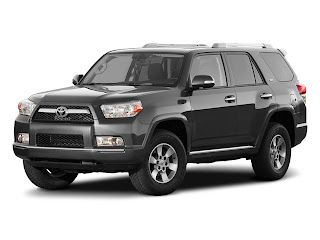
In 4Runner three trim levels; SR5, Sport Edition, and Limited, which is available in rear-or four-wheel drive. Each trim has a five-speed automatic transmission and either 236-hp 4.0-liter V6 or a 260-hp 4.7-liter V8. V8 engine can increase the 4Runner’s tow rating of 7300 pounds. Optional third-row seats to expand the capacity of seven passengers. Stability control, traction control, driver and passenger seat-mounted side airbags, and first and second row side-curtain airbags with roll-over sensors that standard.The 4Runner Trail level is available as a 4WD model, and supplements the SR5's equipment list with a hood scoop, black fender flares and rocker panels, a locking rear differential, Crawl Control that electronically modulates throttle and brakes when ascending or descending hills, off-road-oriented tires, tinted headlights and taillights, a sunroof, a back-up camera that displays in the rearview mirror, upgraded gauges, steering-wheel-mounted audio controls, water-resistant upholstery, power front seats, a sliding rear cargo deck and an upgraded audio system with satellite radio, a USB port with iPod connectivity and Bluetooth phone and audio functions.
The 2011 Toyota Land Cruiser Prado that is that the results of redesign or facelift. The half that redesigned is that the headlights with new style and therefore the cabin is additional spacious as a result of the increased house between the front seat and second row. Additionally, the structure of body and frame is strengthened still.
The fascinating factor is that the further of refined devices that build the driving force of Prado lighter and exciting when through any road conditions from swish road to off-road.
Multi-terrain Monitor
The special technology feature from Land Cruiser Prado is that the Kinetic Dynamic Suspension System (KDSS) that makes the damping that generated by the automobile fits with road surface conditions. within the latest version, there’s conjointly further a Multi-terrain Monitor.The world famous king of SUV’s has now landed on the Indian soil. The great big Toyota Land Cruiser Prado is a power packed petrol 4.0 V6 engine four wheel drive. Running on petrol the SUV features a 5 speed automatic transmission. The Land Cruiser has the look and the sophistication to get heads turning in the city streets as well as the gruesome power to take on any terrain all over India. This mean machine offers you style, comfort, versatility, durability, drive and a whole lot more.
Toyota unleashed the Land Cruiser Prado in India after much speculation and market research. After some time they finally came to the conclusion that the car is something that the status conscious aristocrats of India sought after. The car developed a cult status soon after its release in India with the wealthy industrialists and the celebrities taking on the car. Thus there has been a significant increase in the SUV segment in India with sales growth soaring over 250% of what it sued to be.
The fact that Toyota has put its trust in making the Prado a petrol fuelled car. This is because the petrol powered monster can put quite a strain on your wallet because it gets thirsty quite often. With petrol prices increasing at such a fast pace one wonders if a diesel option would have been more favored by the public. The Land cruiser debuted in 1951 and since then has come a long way. Breaking away slightly from the traditionally boxy look of the Land cruiser the new one is more in line with modern aesthetics. It maintains the high stance and wide body and the huge wheels. The Land Cruiser Prado has an imposing personality and can easily overshadow other SUV’s of the like. It even measures relatively larger than most of its competitors.
The huge size of the exterior means more space in the interior. Once you step in then only will you realize how well the interior of this SUV has been designed. The inside screams out class and sets you up in a comfortable and luxurious environment. As is the case with most seven seat SUV’s the last deck of seats is mounted too close to the floor for seating any adult. It also features separate seats even in the back rather than a bench and each of them can be folded to provide for storage space. With a host of other safety features the Toyota Land Cruiser Prado is a very engaging SUV which nobody would like to get out of.